
FTL Shipments
Book a dedicated truck from A to B - best for full loads or time-sensitive cargo.
10+ pallets
or > 7,000 kg threshold
1 stop
direct A → B route
500+
validated carriers
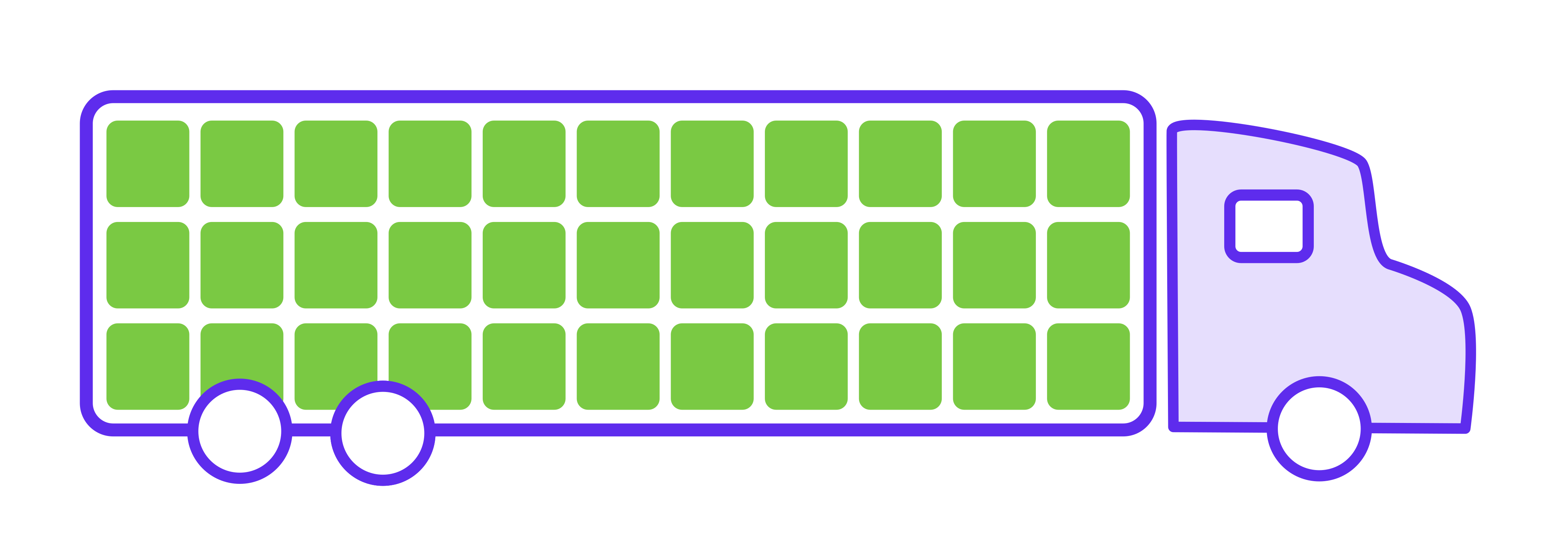
One shipment, one truck - A to B
What is full truckload (FTL)?
FTL stands for full truckload - usually a dry van or reefer - moving a single shipment from one shipper to one destination. The alternative is LTL, where the same truck carries multiple shipments to multiple stops.
As a rule of thumb, FTL becomes attractive from around ten pallets or 7,000 kg. The decision between FTL and LTL usually comes down to four factors: speed, security, performance and cost.
Through Cargors you can request and manage FTL transport for standard, temperature-controlled and ADR goods - directly with carriers, with no broker markup.
When FTL is a good fit
Faster transit
FTL travels A → B on the most efficient route. No detours to C, D or E to drop off other shipments - that's why it's almost always the default for time-sensitive cargo.
Less damage risk
Your shipment stays on one truck with the same hands from pickup to delivery. Fewer transfers means fewer chances for damage or lost items.
Fewer delays
With fewer stops and less handling, there are fewer chances for unexpected delays - improving your on-time pickup (OTP) and on-time delivery (OTD) performance.
Cheaper for large shipments
The bigger the load, the more cost-efficient FTL becomes. A near-full truckload is almost always cheaper as one FTL than split into several smaller LTL shipments.
When FTL isn't the right choice
Small shipments
For loads below 10 pallets or 7,000 kg, LTL is usually more economical. If your shipment falls in the grey zone, decide based on how time-sensitive it is and the available carrier capacity.
Inefficient loading raises CO₂
Around half of trucks across Europe drive partially empty. Reserving a full truck when you don't need one costs more and produces unnecessary CO₂ emissions that can easily be avoided.
Request quotes for your FTL shipments in less than 10 minutes.
Get StartedFAQ